If you intend to print in multiple layers you’ll need to determine a best method to keep all the materials in place throughout the process.
Registration determines whether your layers align from print to print, as opposed to being off the mark and out of place.
This method can be a hassle at initial setup, but I’ve found keeps everything tightly registered and consistent so I’ve stuck with it
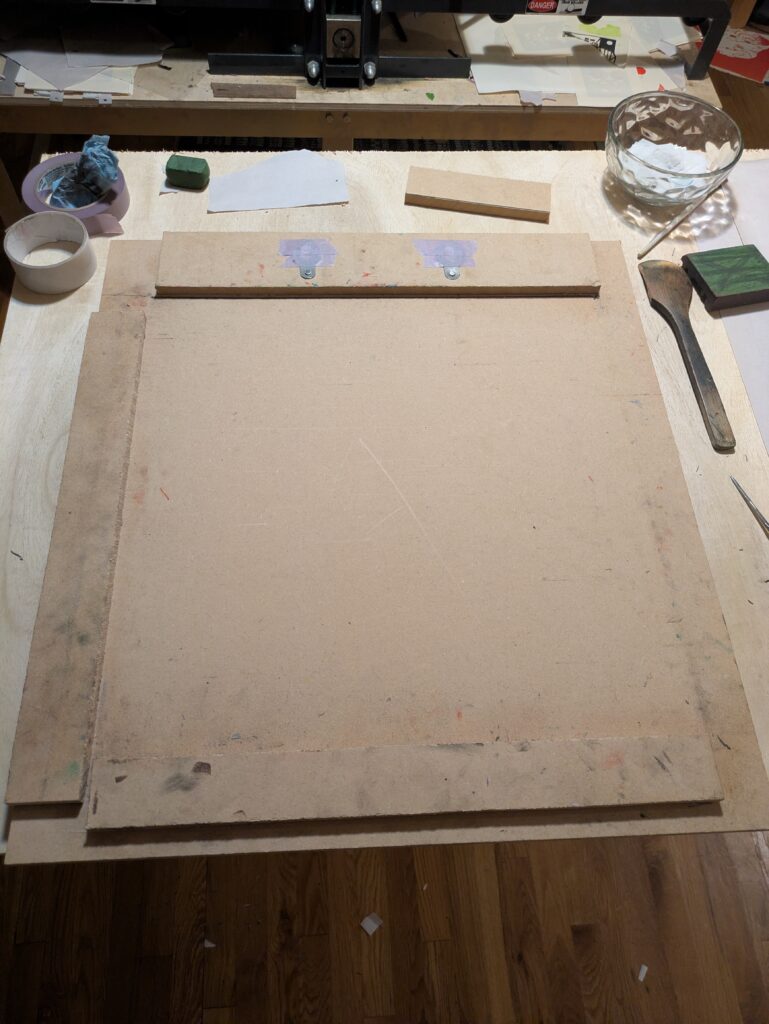
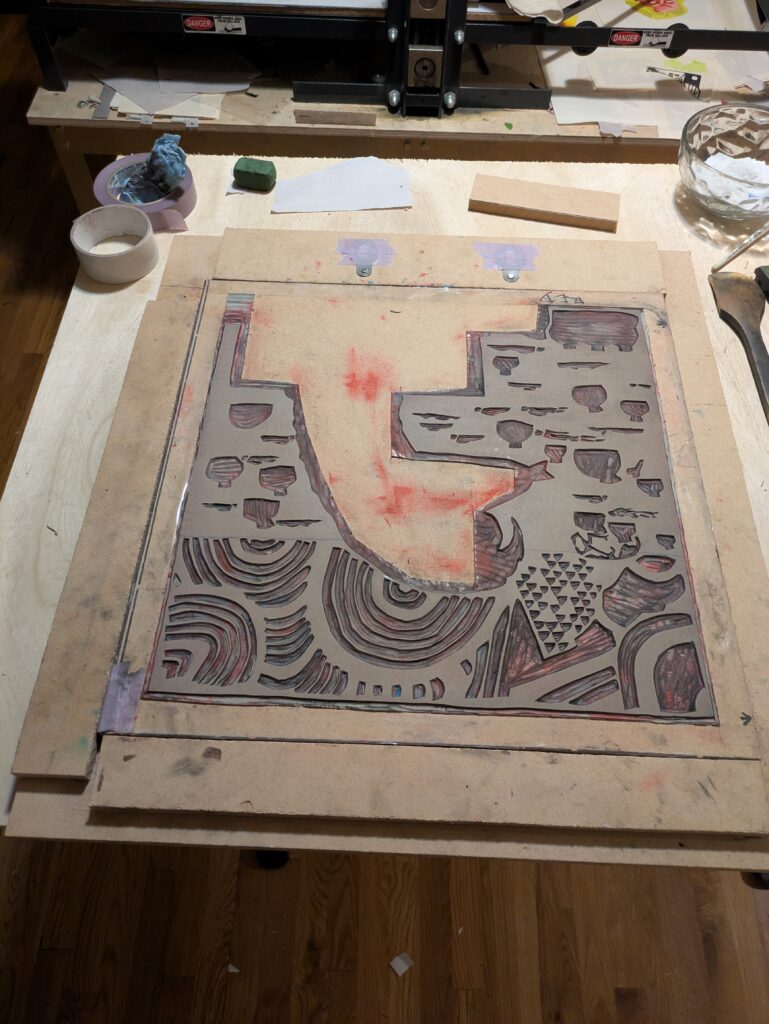
A registration jig holds your block in a consistent place, ensures your paper lands on the inked block in exactly the same place for every single sheet in the edition, and also allows you to transfer an image to multiple blocks without placement error.
While I’ve used glue to put some jigs together, I’ve found over time that a strong double sided carpet tape works fine
I often just use chip board, but there’s no problem using something more sturdy. The board here is put together using MDF board.
First you’ll want to cut some material (I often use the same material I mount the lino to) into strips as long as your block on both the bottom and one side. You’ll tape these to the board looking roughly like an L .
Be sure that it aligns perfectly so that your block fits snugly into the wedge opening!
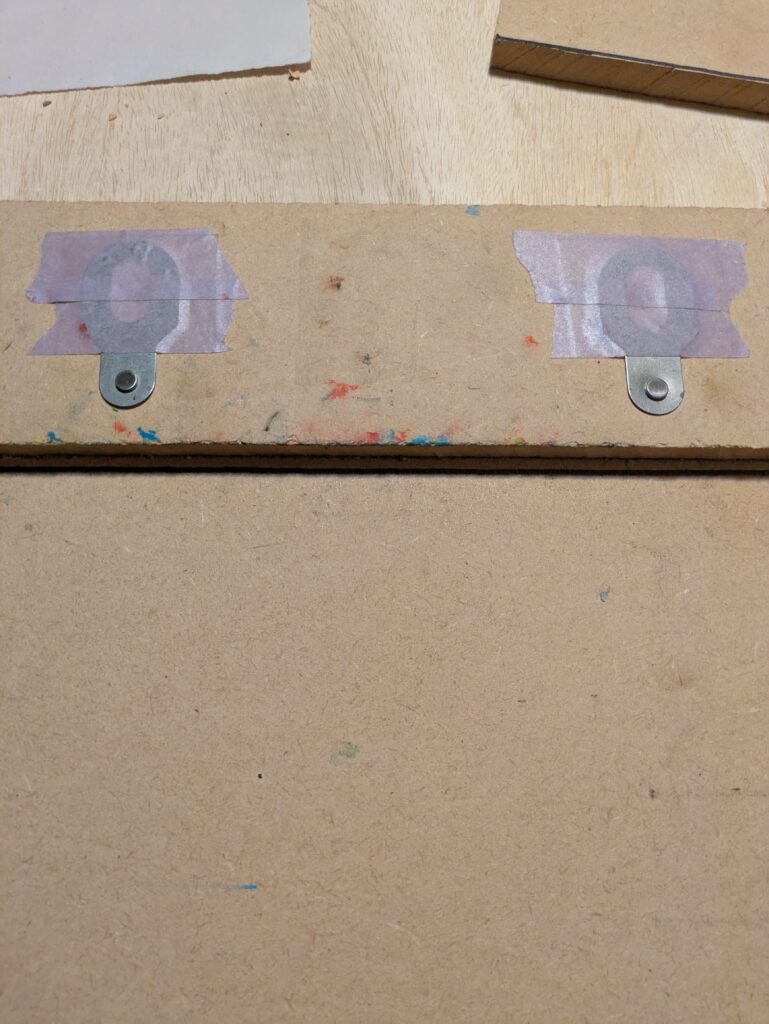
Using the same material my block is mounted to I tape down a set of registration pins. These will attach to each sheet of paper in an edition.
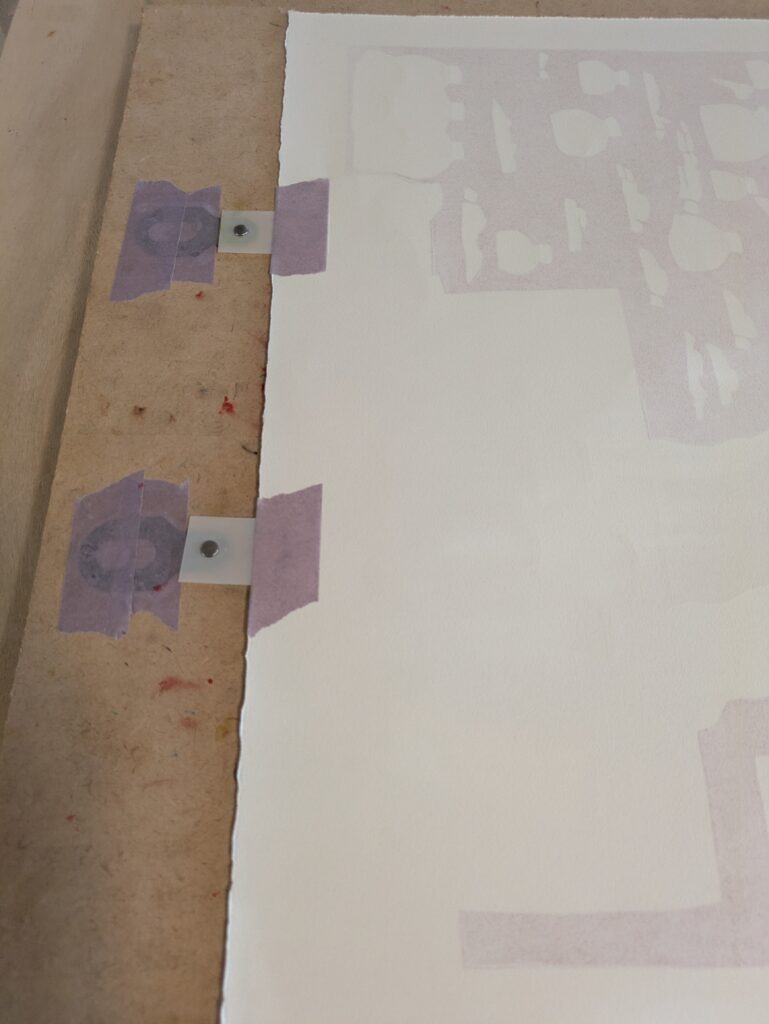
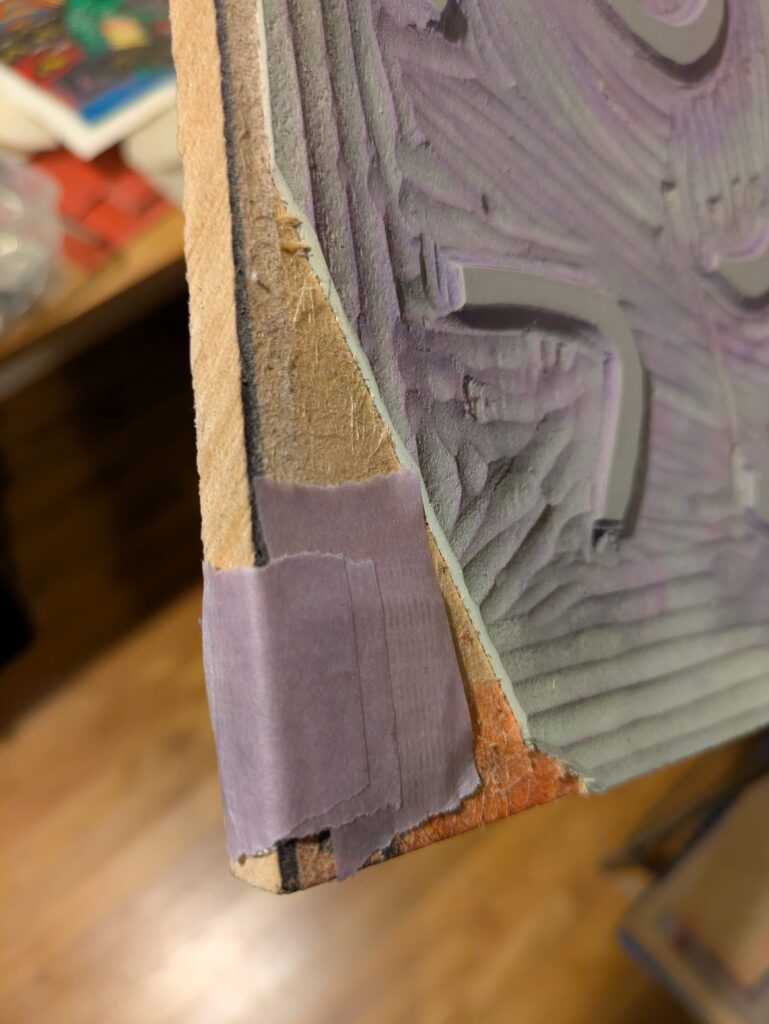
I handsaw everything on a foldout table in a narrow hallway so it’s not always cut to a perfect fit. To compensate for this I take extremely rough sandpaper to the MDF board until it fits snug into the L
I can’t stress enough how important it is that your mounted blocks fit perfectly into the L without any shifting. If it shifts: sand it until it doesn’t!
On some blocks I even pad a corner with double sided carpet tape until the blocks fits snug into the L